Choosing the right die cutting process can affect production speed, material use, part consistency, and overall project efficiency. Sun Process Converting provides precision die cutting services for a wide range of materials, including pressure sensitive materials, adhesives, foam, plastics, rubber, paper, fiberglass, and foils. The company offers both rotary die cutting and steel rule die cutting, along with other converting services such as slitting, sheeting, and flat cutting. Its ISO 9001:2015 certified facility supports production for industries including aerospace, automotive, medical, electronics, packaging, and OEM applications.
Benefits of Rotary Die Cutting
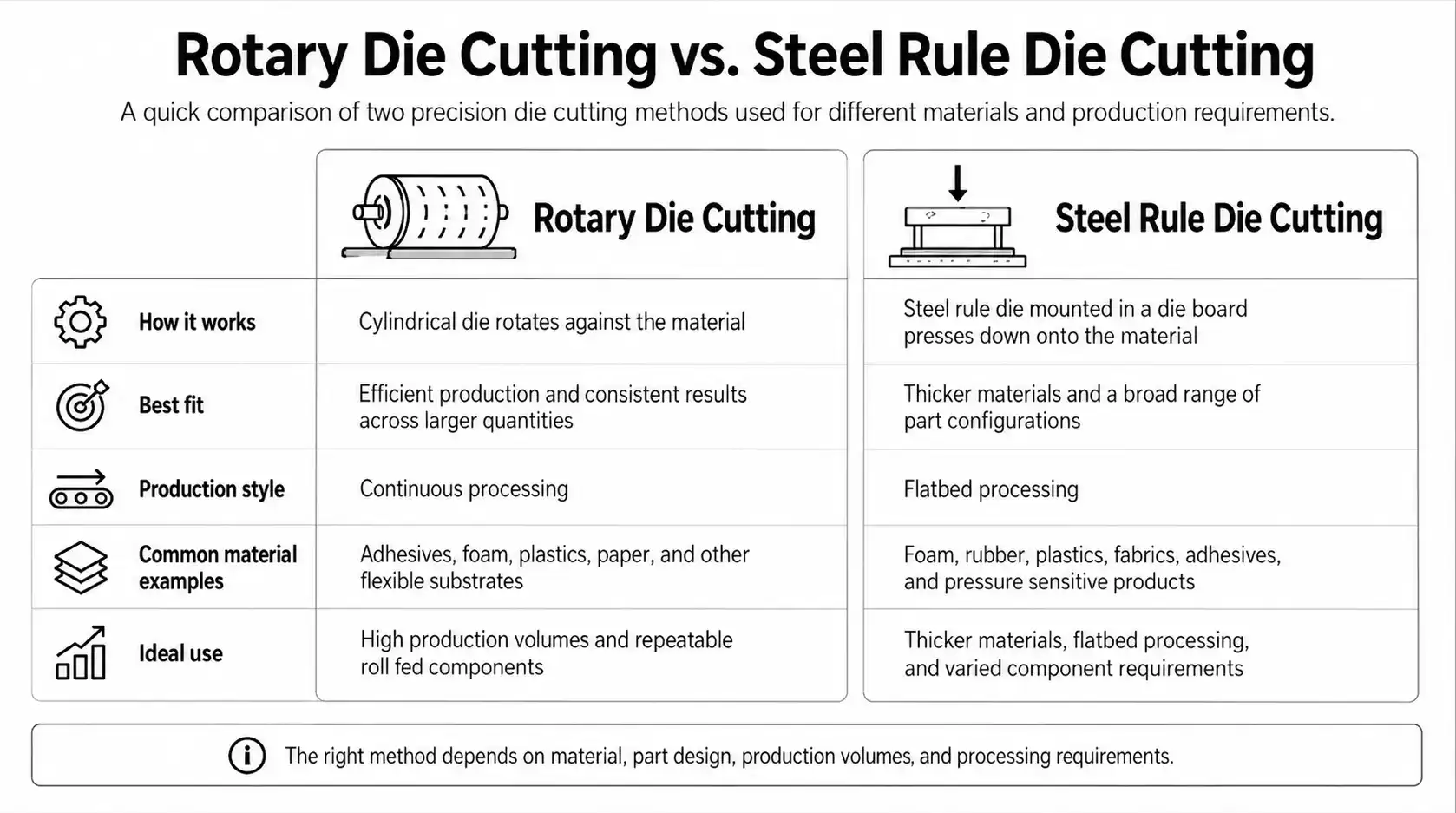
Rotary die cutting uses a cylindrical die that rotates against the material as it moves through the equipment. This continuous process makes it a strong choice for projects that require efficient production and consistent results across larger quantities. Sun Process uses rotary die cutting for materials such as adhesives, foam, plastics, paper, and other flexible substrates.
For production environments where repeatability and output matter, rotary processing can help keep parts moving efficiently through the converting operation. It is also well suited for roll fed materials, making it practical for applications where the finished components need to be produced continuously.
Sun Process can also combine die cutting with additional converting processes. Depending on the project, customers can use services such as laminating, perforating, printing, tabs, backslitting, kiss cutting, and specialized liners to produce components ready for their next manufacturing step.
Benefits of Steel Rule Die Cutting
Steel rule die cutting, also known as flatbed die cutting, uses a steel rule die mounted in a die board. The die presses down onto the material to create the required shape. This method is particularly useful for thicker materials and projects requiring a broad range of part configurations.
Sun Process uses steel rule die cutting across materials including foam, rubber, plastics, fabrics, adhesives, and pressure sensitive products. The process can also support applications where a flatbed approach provides the right combination of part size, material handling, and production requirements.
Sun Process pressure sensitive vinyl media is suitable for steel rule die cutting and is used for applications such as labels, decals, decorative trim, and industrial or promotional signage.
When to Use Each Method
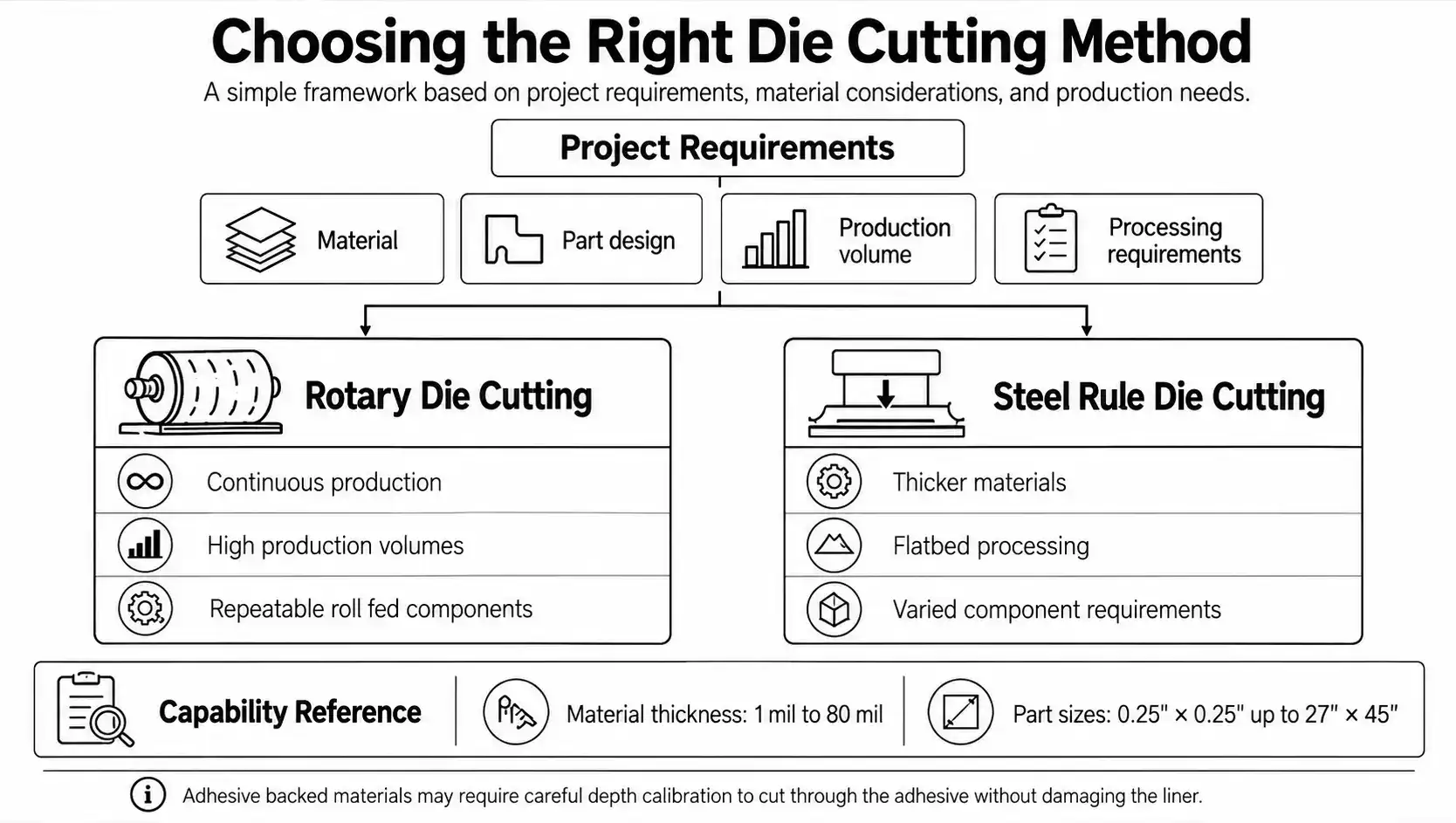
The best option depends on the material, part design, production volume, and processing requirements. Rotary die cutting is generally a strong fit for continuous production and larger volume requirements where consistent output is important. Its rolling die configuration allows material to move efficiently through the cutting process.
Steel rule die cutting can be a practical choice for thicker substrates and projects requiring flatbed processing. It gives manufacturers flexibility across a broad range of materials and part configurations.
Your material can also influence the process. Sun Process specializes in adhesive backed materials that may require careful depth calibration to cut through the adhesive layer without damaging the liner. Its die cutting capabilities accommodate materials from 1 mil to 80 mil in thickness and part sizes from 0.25″ x 0.25″ up to 27″ x 45″.
- Rotary die cutting: Continuous processing, high production volumes, and repeatable roll fed components
- Steel rule die cutting: Thicker materials, flatbed processing, and varied component requirements
Let’s Cut to the Chase
The right precision die cutting process starts with understanding your material and finished part requirements. Sun Process Converting can help you select the appropriate method and combine die cutting with coating, laminating, slitting, sheeting, or other converting services when needed.
Whether your project calls for rotary die cutting or steel rule die cutting, Sun Process has the equipment, materials expertise, and converting capabilities to move your project from specification to finished component. Contact Sun Process Converting to discuss your requirements and request a quote.
FAQ
Can Sun Process die cut adhesive-backed materials?
Yes. Sun Process specializes in adhesive backed materials and has the equipment and depth calibration capabilities needed for multi-layer materials. Its die cutting processes can cut through adhesive materials while avoiding damage to the liner.
What materials can Sun Process die cut?
Sun Process can die cut a broad selection of materials, including foam, rubber, paper, plastics, fiberglass, fabrics, foils, silicone, urethane, PVC, polyesters, and pressure sensitive materials.
Can die cutting be combined with other converting services?
Yes. Sun Process can supplement die cutting with services such as film laminating, perforating, and printing. The company also provides coating, laminating, slitting, sheeting and flat cutting for projects requiring multiple converting processes.
What size parts can Sun Process produce?
Sun Process lists die cutting capabilities for parts ranging from 0.25″ × 0.25″ to 27″ × 45″, with material thicknesses from 1 mil to 80 mil. Actual capabilities depend on the material and application requirements.